For anyone who wants to join in, simply choose five pieces of music and post them for other bloggers to enjoy. Then check out the set posted by the other 5 on Friday blogger -- you can sign in over at Golch Central's Rambling Stuff.
I certainly never forsaw dedicating two musical sets to Stephen Harper.
In August, when he cynically called the longest election in Canadian history, somehow certain that using medieval seige tactics would starve out his two competitors, I dedicated Set 279to him.
Travis at Trav's Thoughts invites everyone to lay down a short set of music that takes their fancies for his 5 on Friday meme.
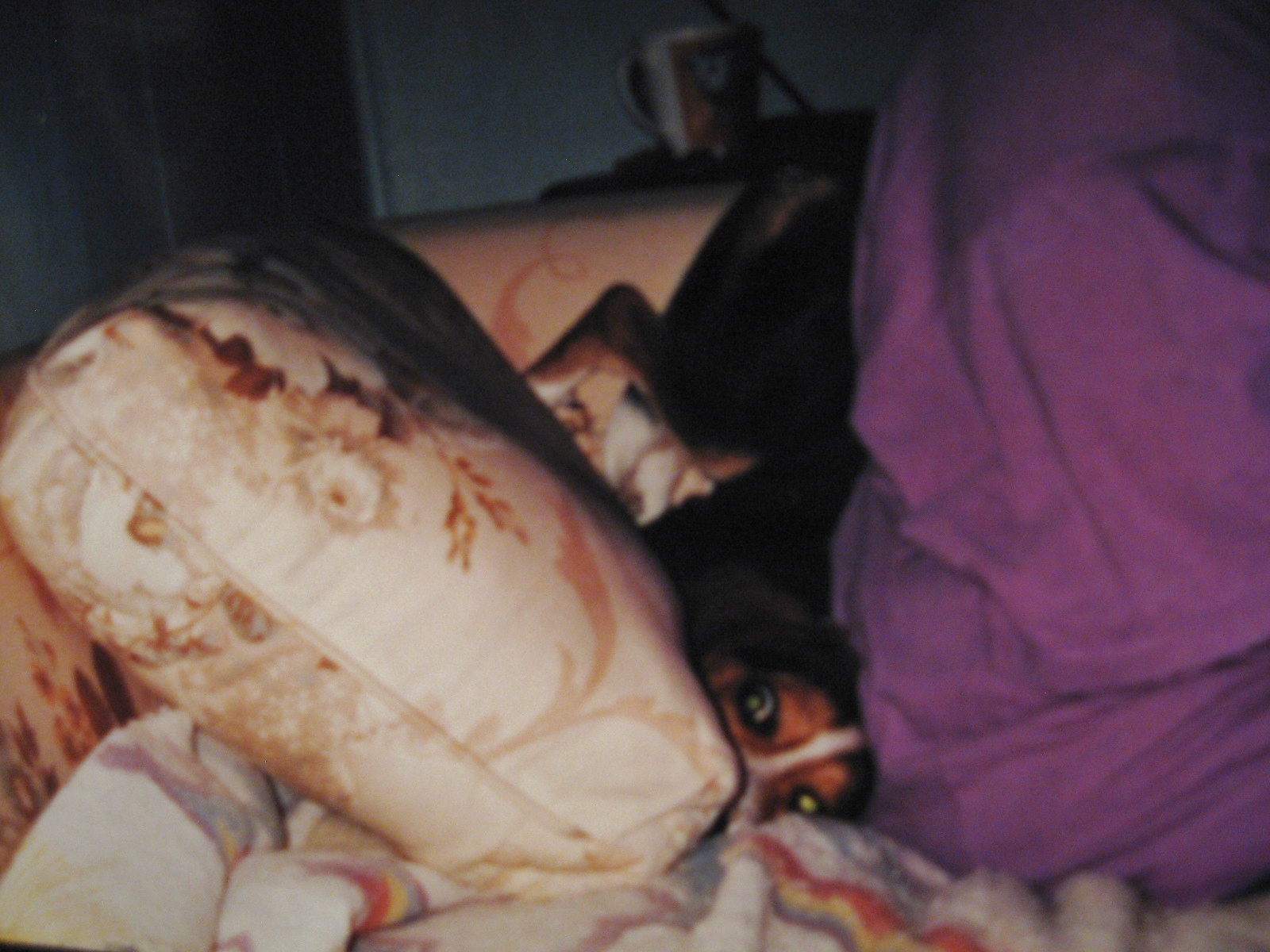
Today would have been my dog Xena's 12th birthday. She passed away on Jan. 6th, and her loss has colored my entire year. It's taken me all of these twelve months to work myself up to this post in her honor. Happy Birthday, my dear sweet Little Girl.
1 - Sing, Sing, Sing, written by Louis Prima, 1936
Performed here by the Louis Prima Orchestra and danced by the Floogees, a Dutch Lindy Hop group. This is my favorite wartime music, no comparison. When I was 18, I performed in The Royal Nova Scotia International Tattoo as a civilian dancer, and one of the two pieces we danced was a 40's medley which started with Sing, Sing, Sing. Unfortunately I broke a bone in my foot before the show, so I had to drop out of the 40's piece, which had a lot of hopping moves. I did manage the Rockettes piece, though, which was mostly kick-stepping.
Meanwhile...who knew the Dutch could groove like that?!?
This has got to be the most ferocious swing dance sequence you'll ever see. Performed by Whitey's Lindy Hoppers in a sequence from the film Hellzapoppin, a group of domestic employees puts on an impromptu jam session and explodes into dance backstage. To me, this scene foreshadows the coming breakout of African Americans from their pre-war social roles. Once again, their wartime travels to Europe exposed African American culture to a worldwide audience.
3 - Boogie Woogie Bugle Boy, written by Don Raye and Hughie Prince, 1941
Performed by the Andrews Sisters. I can't separate wartime music from the sound of the Andrews Sisters - and this song is the quintessential WWII song for me.
They made him blow a bugle for his Uncle Sam It really brought him down, because he couldn't jam The Captain seemed to understand Because the next day the Cap' went out and drafted a band And now the company jumps when he plays reveille He's the boogie-woogie bugle boy of Company B
This tune appeared on the album For Our Armed Forces Overseas, one of a series of recordings by V-Disc, a wartime collaboration between the US government and private record labels. Meant to 'motivate soldiers and improve morale,'(Wikipedia) Strip Polka was on the 1942 Hit Parade for the Andrews Sisters.
There's a burlesque theatre where the gang loves to go To see Queenie the cutie of the burlesque show And the thrill of the evening is when out Queenie skips And the band plays the polka while she strips
"Take it off", "Take it off" cries a voice from the rear "Take it off", Take it off" Soon it's all you can hear But she's always a lady even in pantomime So she stops! And always just in time
5 - I Don't Want to Set the World on Fire, written by Eddie Seile, Sol Marcu, Bennie Benjamin, Eddie Durham, 1941
The Ink Spots were a highly influential quartet whose rich vocal style led to the doo-wop groups of the 1950's. Their song currently appears on the trailer for Fallout 3, an action role-playing game just released Tuesday.
I don't want to set the world on fire I just want to start A flame in your heart In my heart I have but one desire And that one is you No other will do
I've lost all ambition for worldly acclaim I just want to be the one you love And with your admission that you feel the same I'll have reached the goal I'm dreaming of
Believe me! I don't want to set the world on fire I just want to start A flame in your heart
6 - Moonlight Serenade, written by Glenn Miller, 1939
Performed by the Glenn Miller Orchestra, the clip is from the 1954 film The Glenn Miller Story starring James Stewart in the title role. Moonlight Serenade typified the Miller Sound, which features a clarinet lead for the saxophone section.
Performed by Django Reinhardt's Quintette du Hot Club de France, featuring violinist Stéphane Grappelli. Reinhardt was a Belgian gypsy who became one of Europe's first important jazz musicians. He survived the war even though gypsies were among the targets of the Nazi's ethnic cleansing. "He was especially fortunate because the Nazi regime did not allow jazz to be performed and recorded. He apparently enjoyed the protection of the Luftwaffe officer Dietrich Schulz-Köhn, nicknamed 'Doktor Jazz', who deeply admired his music." (Wikipedia)
The photo above was taken by Doktor Jazz and shows Django Reinhardt standing in front of La Cigale in Paris with a Nazi officer, four African-American musicians and a Jew. So much for Nazi ideology. Swing, baby, swing!
8 - When You're Smilin', written by Mark Fisher, Joe Goodwin and Larry Shay, 1929
Performed by Bing Crosby, a towering presence in music, film and television. By the war years, he was a top star in radio and film, with 18 films released between 1939 - 1945, including Road to Morocco, Holiday Inn and Going My Way.
The clip features Hollywood's efforts to boost morale through USO shows. USO stands for United Service Organizations.
When you're smiling When you're smiling The whole world smiles with you
When you're laughing When you're laughing The sun comes shining through
But when you're crying You bring on the rain So stop your sighing Be happy again
Keep on smiling Cause when you're smiling The whole world smiles with you
9 - I'll Be Seeing You, written by Sammy Fain and Irving Kahal, 1938
Holiday was a big band vocalist during the war years, fronting for Artie Shaw among others. This made Billie Holiday the first black woman to work with a major white orchestra.
The clip features scenes from The Notebook.
I'll be seeing you In all the old familiar places That this heart of mine embraces All day through.
I'll be seeing you In every lovely summer's day; In every thing that's light and gay. I'll always think of you that way.
I'll find you In the morning sun And when the night is new. I'll be looking at the moon, But I'll be seeing you.
10 - You'll Never Know, written by Harry Warren and Mack Gordon, with lyrics based on a poem by war-bride Dorothy Fern Norris, 1943
Performed by Michael Buble, a modern-day crooner originally from British Columbia, on the west coast of Canada.
You'll never know just how much I miss you You'll never know just how much I care And if I tried, I still couldn't hide my love for you You ought to know, for haven't I told you so A million or more times?
You went away and my heart went with you I speak your name in my every prayer If there is some other way to prove that I love you I swear I don't know how You'll never know if you dont know now
11 - It Had to be You, written by Isham Jones and Gus Kahn, 1924
Performed by Harry Connick, Jr., another modern-day big band leader from New Orleans, Louisiana. The clip is from the 1989 film When Harry Met Sally, a film about opposite-sex friends who discover they actually love each other, which I went to see about a month before my 2-year friendship with Brad turned into love. Ask me if I found it excruciating to sit through...especially the awkward New Year's Eve kiss that's in the clip!
It had to be you It had to be you I wandered around And finally found The somebody who
Could make me be true Could make me be blue Or even be glad Just to be sad Just thinking of you
Some others I've seen Might never be mean Might never be cross Or try to be boss But they wouldn't do For nobody else gave me the thrill With all your faults I love you still
It had to be you It had to be you It had to be you
Performed by Frank Sinatra, this is one of my favorite songs sung by one of my favorite singers. The women in this clip wear a fabulous array of 40's hairstyles and glamorous dresses.
Night and day, you are the one Only you beneath the moon or under the sun Whether near to me, or far It's no matter darling where you are I think of you Day and night
Night and day, why is it so? That this longing for you follows wherever I go In the roaring traffic's boom In the silence of my lonely room I think of you Day and night
Night and day Under the hide of me There's an oh such a hungry yearning Burning inside of me And this torment won't be through Til you let me spend my life making love to you Day and night Night and day
13 - We'll Meet Again, written by Ross Parker and Hughie Charles, 1939
Performed by Vera Lynn, an English singer known as The Forces' Sweetheart. Singing for several dance bands, including Bert Ambrose and his Orchestra, Vera Lynn's radio series Sincerely Yours sent a taste of home to British forces overseas.
Possibly the most well-known and touching of any song from the war years, this song bravely states that the singer and listener will meet again - hopefully in this life, but most definitely in the next.
We'll meet again Don't know where Don't know when But I know we'll meet again some sunny day
Keep smilin' through Just like you always do Till the blue skies drive the dark clouds far away
So will you please say hello To the folks that I know Tell them I won't be long They'll be happy to know That as you saw me go I was singing this song
We'll meet again Don't know where Don't know when But I know we'll meet again some sunny day
I hope you enjoyed this look back at the songs and music of World War II. Join me next week for another special Thursday Thirteen in time for Remembrance Day.
Champion of the Arts - I write historical and paranormal fiction, as well as poetry. I love to showcase creative works by artists of all stripes. Blogging from Nova Scotia, Canada




 Posts
Posts


